
In our previous post, we talked about Composable Commerce—the idea of building your software stack like a custom LEGO set rather than buying a pre-glued statue.
But how do you know if a piece of software is actually “LEGO-compatible”?
Enter MACH.
MACH is not a specific software; it is a philosophy. It is a set of technical standards that certifies a technology is modern, flexible, and ready for the future. If Composable Commerce is the “What,” MACH is the “How.”
MACH stands for Microservices, API-First, Cloud-Native, and Headless.
Let’s break down this acronym to see why it is the gold standard for modern Retail Tech.
M: Microservices (The “Lego Bricks”)
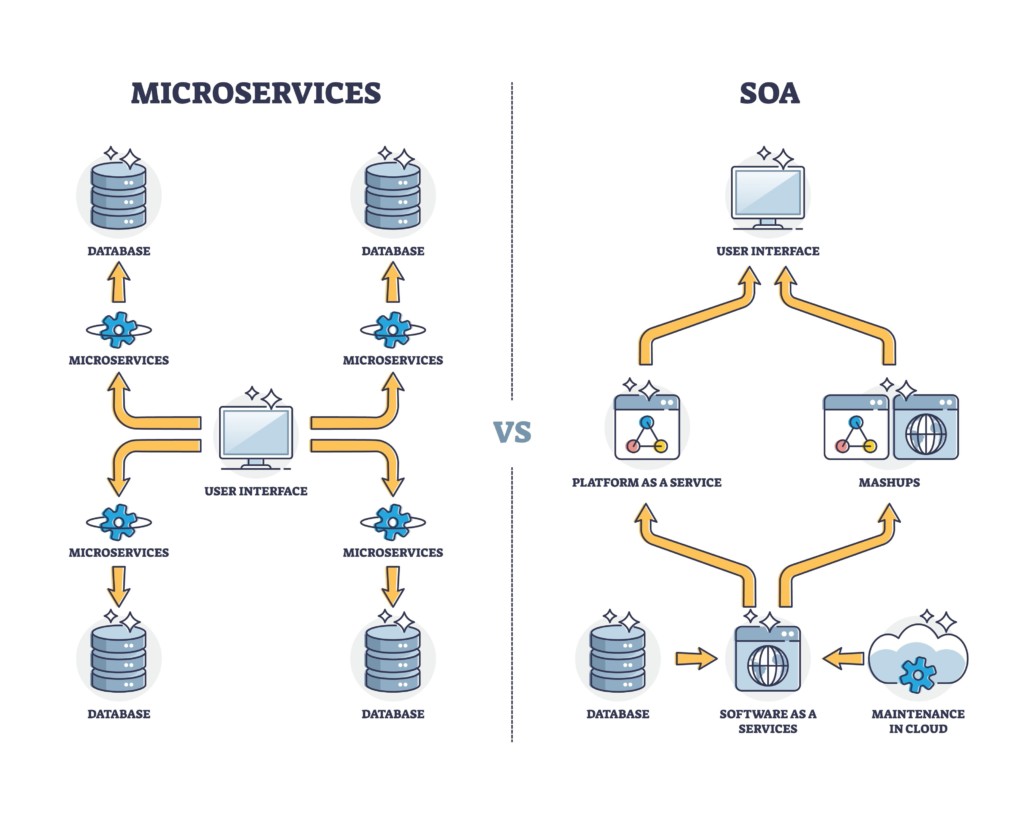
We touched on this in our SaaS Architecture post. Microservices means the software is built as separate, independent pieces of code that do one thing well.
In a non-MACH (Monolithic) system, the “Add to Cart” button and the “Inventory Check” are tangled together in the same messy ball of code. In a MACH system, they are separate services that talk to each other.
Real World Analogy: The Special Forces Team
- The Monolith: A giant, clumsy robot. It’s strong, but if one gear breaks in its leg, the whole robot falls over.
- Microservices: An elite team of specialists (Sniper, Medic, Engineer). They work together towards a goal, but they operate independently. If the Medic gets sick, the Sniper can still finish the mission. They are modular and resilient
A: API-First (The “Universal Translator”)
Many older software platforms added APIs (connectors) as an afterthought. They were built to work alone, and the connectors were glued on later.
API-First means the software was built from day one to talk to other software. It assumes it will never live in isolation.
Real World Analogy: The Universal Power Outlet Imagine buying a toaster that has its wires soldered directly into the wall of your house. That is not API-first. To move the toaster, you have to rip open the wall.
API-First is the standard 3-prong plug. The toaster is designed with a “connector” (the plug) as its primary way of existing. It doesn’t care which wall it’s plugged into; as long as the socket fits, it works. It is built to connect.
C: Cloud-Native (The “Auto-Updating Car”)
There is a difference between “Cloud-Enabled” and “Cloud-Native.”
- Cloud-Enabled: Taking an old software (designed for a dusty server room) and forcing it to run on AWS. It’s clunky.
- Cloud-Native: Software born in the cloud (SaaS). It uses modern cloud features like auto-scaling and automatic updates.
Real World Analogy: Buying vs. Streaming Movies
- On-Premise (Legacy): You buy a DVD. It sits on your shelf. If the director releases a “Director’s Cut” with better scenes, you have to go to the store and buy the DVD again.
- Cloud-Native (MACH): You stream Netflix. You don’t own the file. When Netflix updates the video quality to 4K, your TV just shows 4K instantly. You don’t have to “install” anything. It just evolves.
H: Headless (The “Decoupled Brain”)
We’ve discussed this, but it bears repeating as the final pillar. Headless allows the logic (Backend) to be completely separated from the display (Frontend).
This is crucial for Retail because the “Display” changes every year. Yesterday it was Desktop. Today it is Mobile. Tomorrow it might be VR or a Smart Refrigerator.
Real World Analogy: The Ghostwriter Think of the Backend (Commerce Engine) as a brilliant Ghostwriter. They write the story (the data).
- Headless: The Ghostwriter hands the script to anyone.
- A Publisher can turn it into a Book (Website).
- A Director can turn it into a Movie (Mobile App).
- A Developer can turn it into a Video Game (VR Store).
The Ghostwriter doesn’t care how the story is told, they just provide the content. This allows the story to live anywhere.
Summary
When a retailer looks for new technology, they look for the MACH label.
- Microservices: Keeps it flexible.
- API-First: Keeps it connected.
- Cloud-Native: Keeps it scalable.
- Headless: Keeps it adaptable.
Together, they form the blueprint for a system that never goes obsolete.